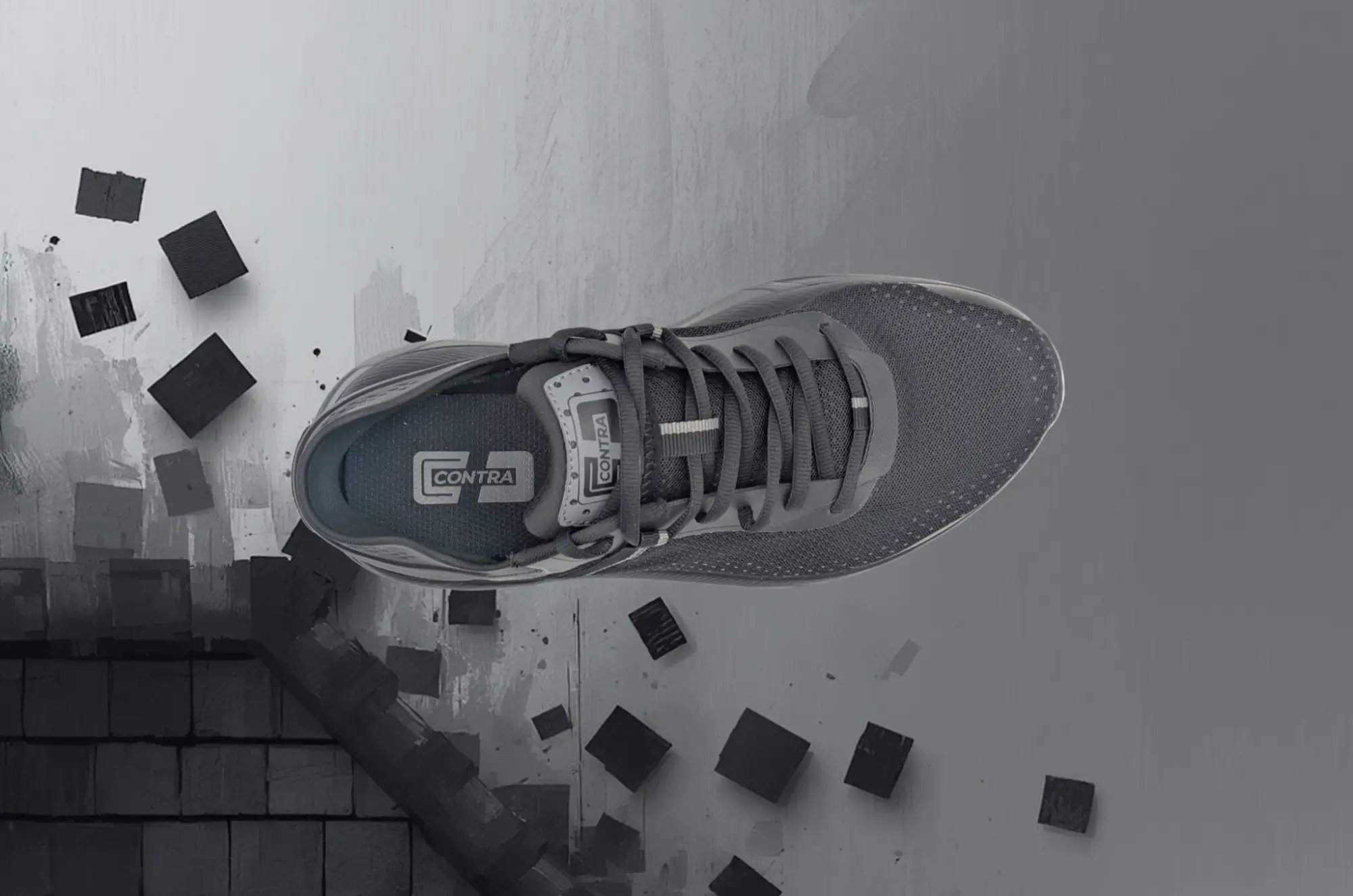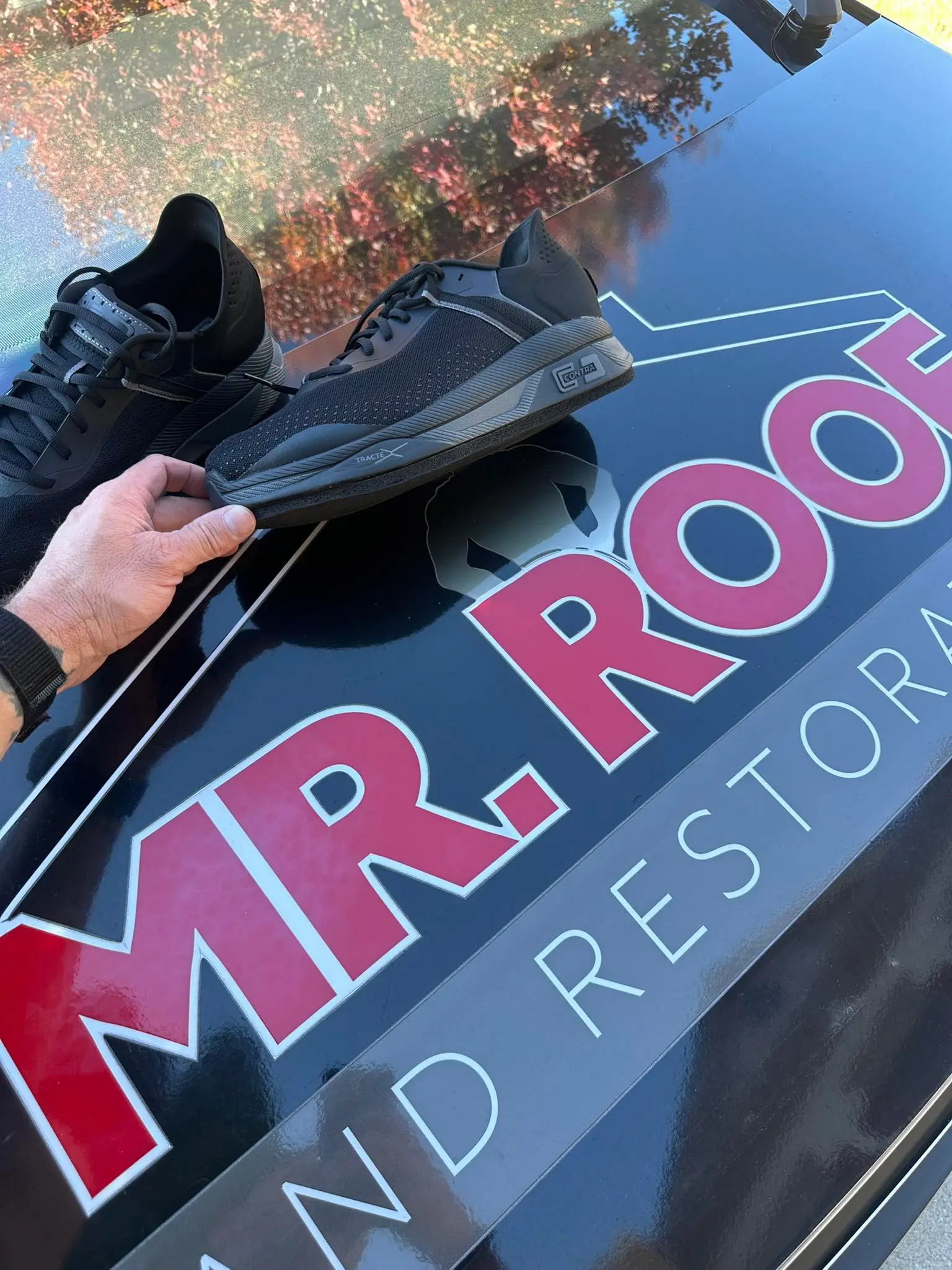
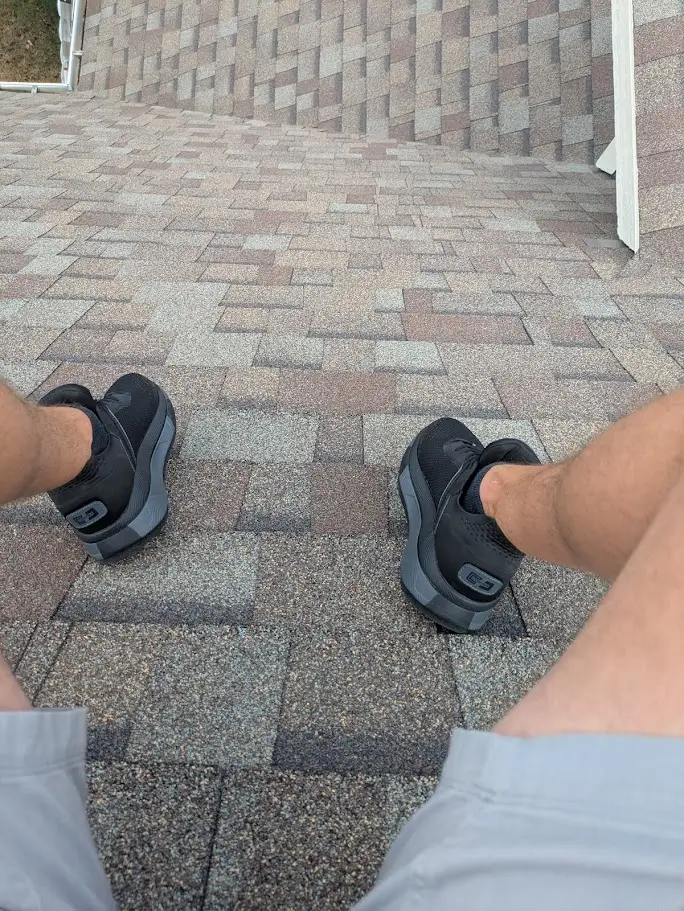
Roof work is unforgiving. Steep pitches, loose granules, unpredictable weather, and long hours put tremendous demand on your footwear. When we launched Contra Footwear, we set out to solve one of the biggest frustrations roofers face: finding a shoe that actually performs on shingles.
But the job doesn’t stop evolving—so neither do we.
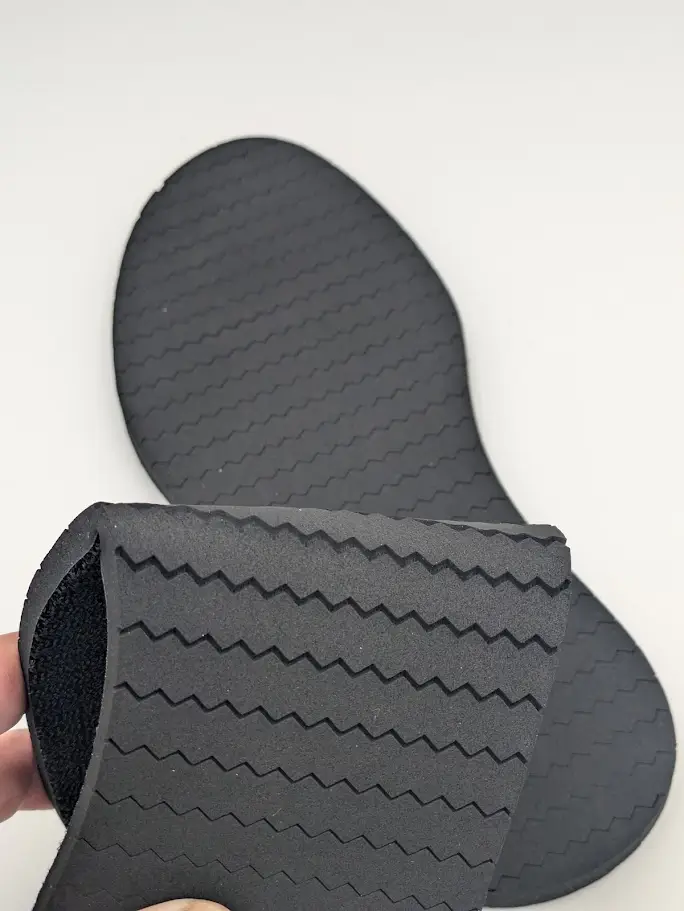
Today, we’re excited to introduce the next-generation Contra Roof Runner Pad, engineered from the ground up to deliver unmatched traction, resilience, and durability for real roofing environments.
This isn’t an incremental update.
It’s a complete rethinking of what a shingle pad can be.
Closed-cell materials present unique difficulties. They resist water absorption—good for roofing—but they’re also notoriously tricky to tune for:
Traction
Compression
Elasticity
Heat resistance
Granule interaction
Abrasion tolerance
Many closed-cell rubbers either become too rigid (reducing grip and feedback) or too soft (premature wear, instability on edges).
To solve this, we:
Optimized the durometer for grip under load
Reinforced the internal cell structure for shear durability
Designed the blend to stay stable in heat and cold
Chlorinated and surface-treated bonding layers for maximum outsole adhesion
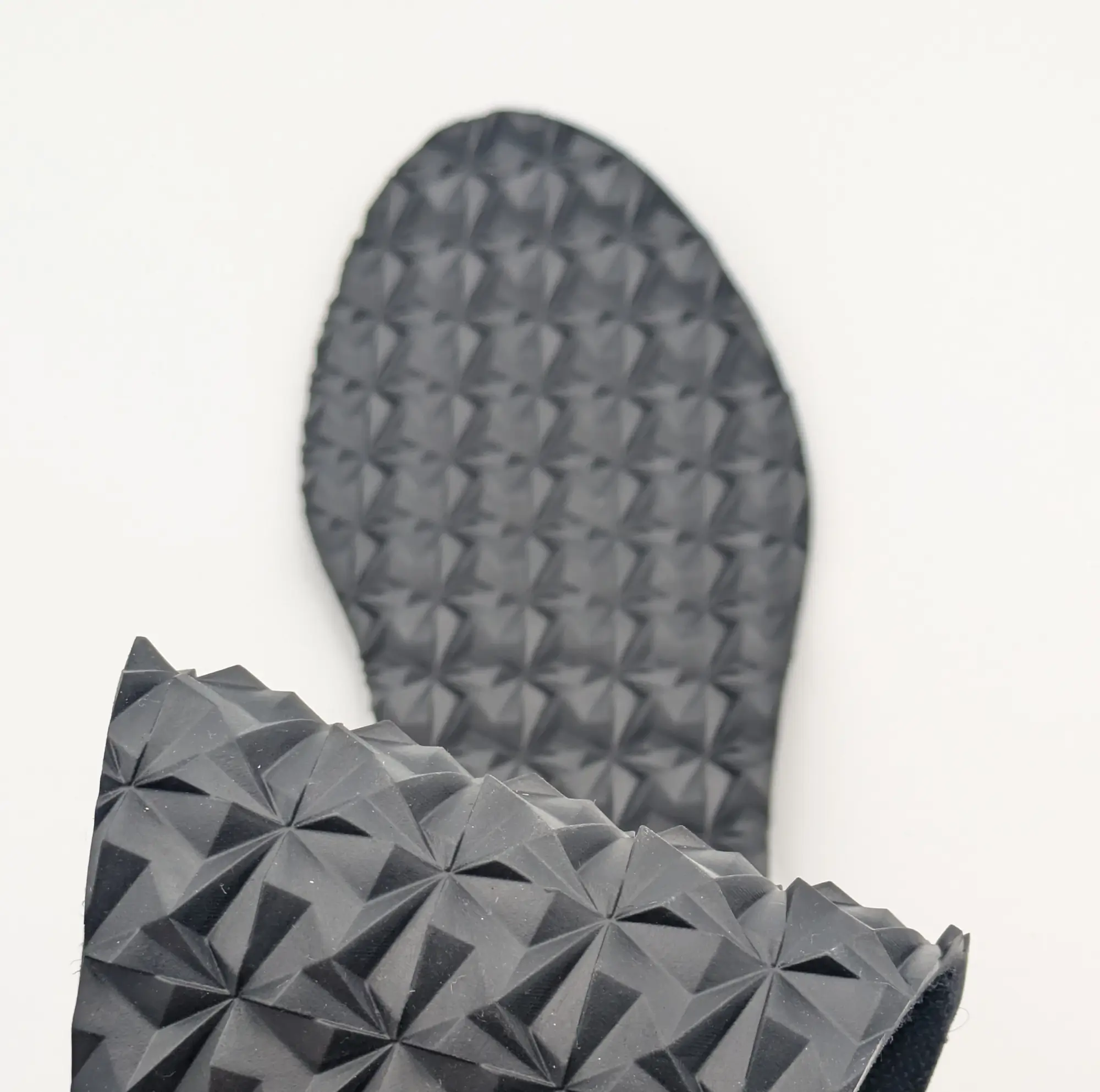
Added micro-texture to improve friction on loose granules
The result is a pad that’s grippy without being gummy, strong without being stiff, and durable without sacrificing agility.

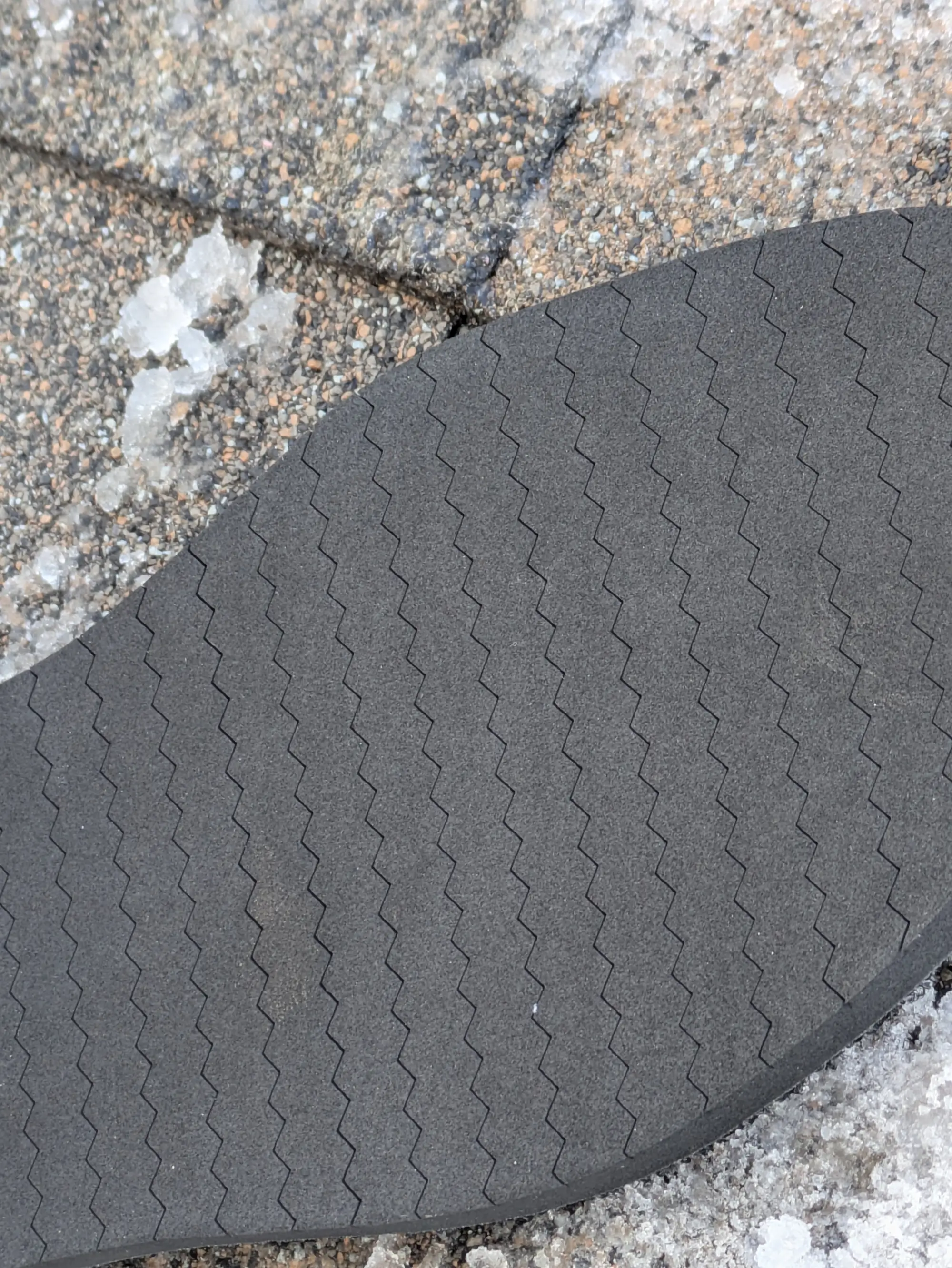
One of the most transformative improvements to the new Roof Runner Pad is our laser-cut siped rubber pattern, inspired by traction technology used in the maritime and boating community.
Siping creates micro-edges that:
Cut through water
Increase surface area
Improve grip on smooth or slick surfaces
Enhance directional traction
Flex under pressure for responsive contact
On a roof, that means:
Better performance on wet shingles
Improved stability on steep pitches
Greater adaptability across different shingle composites
More confidence when the weather shifts unexpectedly
We didn’t just copy siping—we engineered it specifically for roofing, optimizing depth, spacing, and directional flow to complement the rubber compound beneath it.