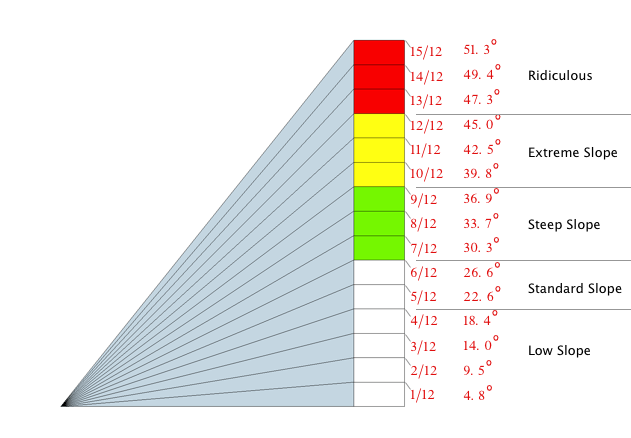
When you’re standing on a 8/12 or 10/12 asphalt shingle roof, traction isn’t a luxury — it’s a basic requirement.
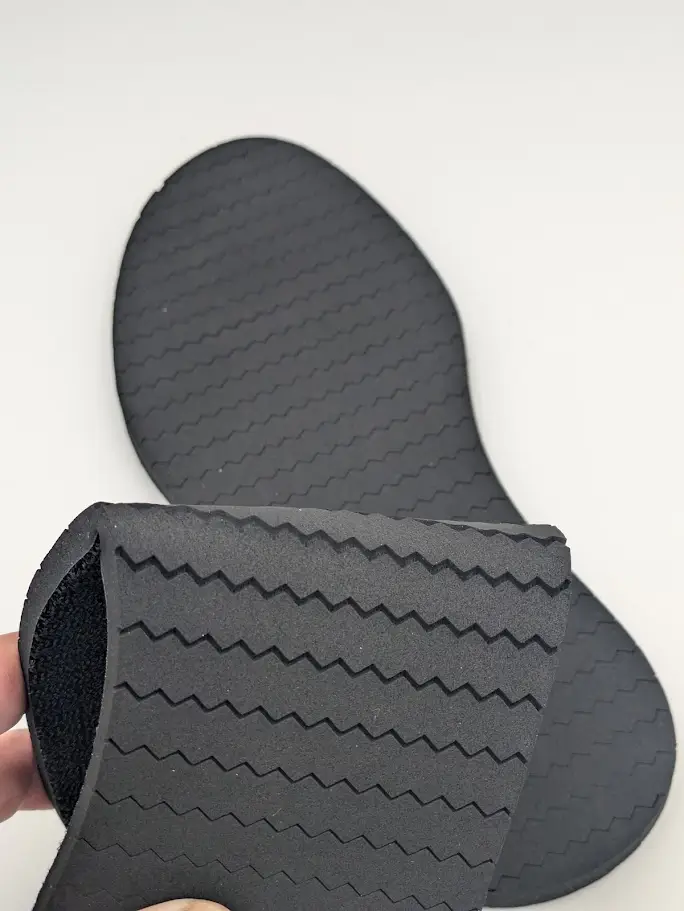
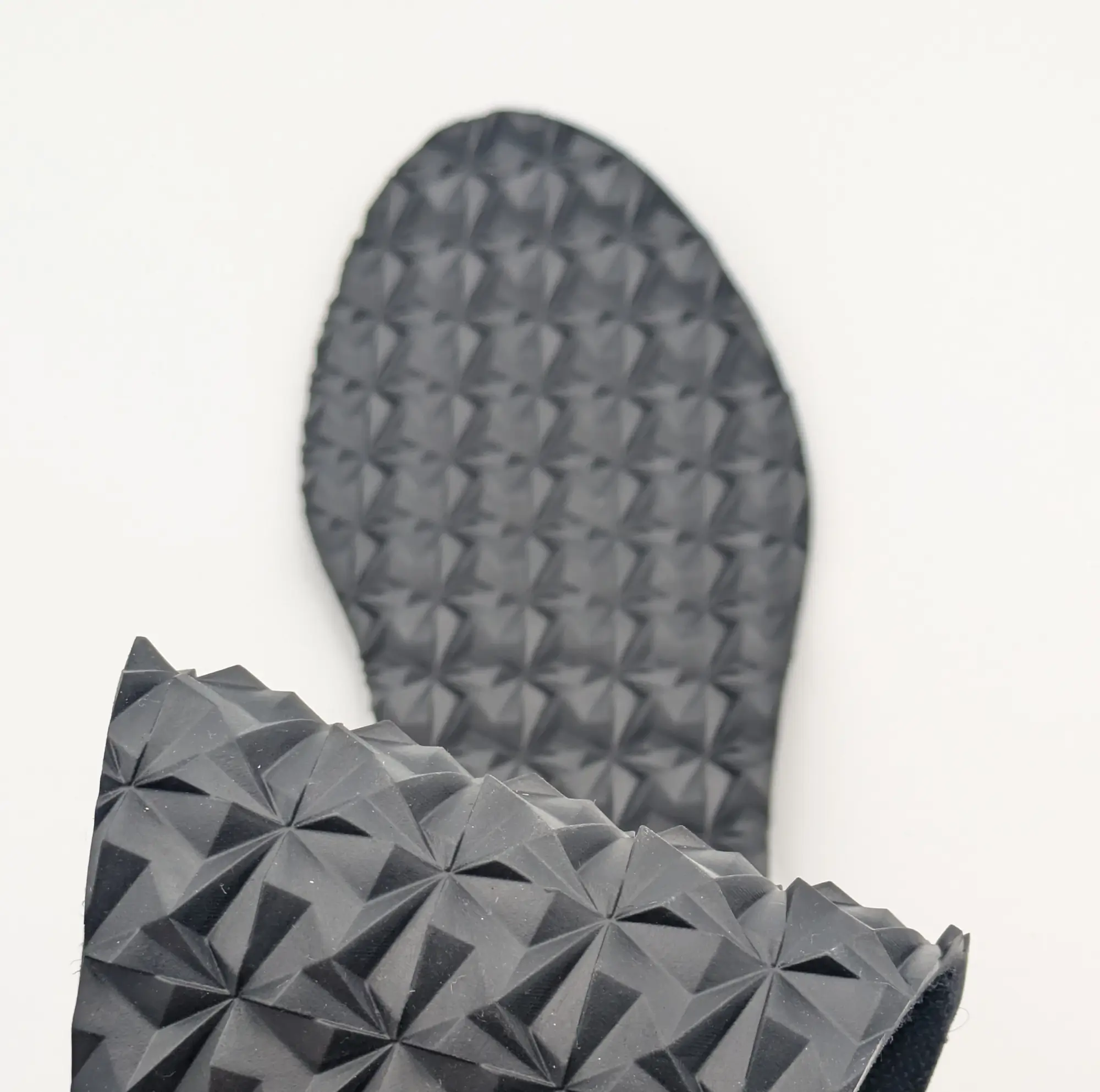
At Contra, we engineer modular outsole pads specifically for steep roofing environments. To understand why our soft, gummy rubber and foam compounds perform differently than typical work boots, you first need to understand the basics of friction — and how traction actually works on shingles.
Friction is the force that resists sliding between two surfaces in contact.
In roofing terms:
Gravity pulls you downhill
Friction resists that pull
The higher the friction, the more secure your footing
The friction force is often simplified as:
Friction = Normal Force × Coefficient of Friction
On a steep roof, the “normal force” (how hard your foot presses into the surface) decreases as pitch increases — which means your traction material becomes even more critical.
This is what keeps you from slipping in the first place. On roofing surfaces, static friction is king.
If you do begin to slide, dynamic friction determines how quickly you stop.
For roofers, static friction is the priority — you want to prevent slip initiation, not recover from it.

Asphalt shingles are not smooth like concrete or metal. They’re coated in ceramic granules embedded in asphalt binder.
That surface:
Is abrasive
Has micro-texture
Has uneven granule distribution
Changes temperature dramatically in sun exposure
Can soften slightly under heat
This means traction is not about “hard tread biting in.”
It’s about material conformity and surface engagement.
You may hear claims about “molecular grip” or “nano adhesion.”
While van der Waals forces are real — weak intermolecular attractions between surfaces — they have very little practical impact in roofing footwear.
Why?
Van der Waals adhesion becomes meaningful when:
Surfaces are extremely smooth
Contact area is near-perfect
Materials are very thin and flexible (like gecko feet or tape adhesives)
Shingles are:
Rough
Granular
Irregular
The microscopic contact between a shoe pad and shingle granules is dominated by mechanical interlocking and viscoelastic deformation, not molecular attraction.
So we don’t design around van der Waals forces.
We design around conformability and hysteresis.
The key to traction on steep shingles is compliance — the ability of a material to deform and mold into surface irregularities.
When a soft rubber or foam compound contacts shingles:
It deforms around granules
It increases real contact area
It creates micro-mechanical interlocking
It dissipates energy (hysteresis friction)
Hard rubber?
Contacts only the high points
Has less real contact area
Slips more easily under shear load
This is why traditional firm work boot outsoles often feel sketchy on steep pitch — they’re designed for durability on concrete, not conformability on granules.
Hysteresis is energy loss that occurs when a soft material deforms and rebounds.
On a roof:
Your weight compresses the pad into granules
As you try to move, the rubber must deform again
That deformation resists motion
This energy loss = additional friction.
Soft, gummy compounds generate higher hysteresis friction than rigid compounds — especially on rough surfaces like shingles.
That’s intentional.
Our roofing pads are engineered around three principles:
We use low-durometer rubber compounds that:
Mold into granule texture
Maintain flexibility in cooler temperatures
Resist hardening under sun heat
Our foam backing layers allow:
Even pressure distribution
Micro-adjustment to uneven surfaces
Reduced pressure points that can initiate slip
Soft does not mean unstable.
The compound must:
Resist chunking
Maintain structural integrity under shear load
Avoid excessive roll-over at the edge
That balance is where real engineering happens.
Many assume aggressive, stiff tread equals better grip.
That logic works for:
Mud
Loose soil
Ice (with studs)
Cleated sports
But shingles are fixed, abrasive, and relatively shallow in depth.
You’re not “digging in.”
You’re maximizing surface conformity and frictional resistance.
On steep roofing surfaces, the winning formula is:
Soft + Compliant + High-Hysteresis + Durable
On a 10/12 pitch (about 40°):
A significant component of your body weight is pulling you downhill
Your traction must overcome that force instantly
Even slight slip initiation can cascade into a fall
That’s why roofing traction compounds must prioritize:
Static friction coefficient
Temperature stability
Conformity under load
Predictable behavior under shear
Because roofing traction compounds are softer by design, they:
Wear faster on concrete
Aren’t ideal for everyday walking
That’s exactly why we build modular systems.
You use:
Roofing pads when on shingles
Everyday soles when on ground
No compromise. No unnecessary wear.
Purpose-built traction when you need it.
Yes — on hard surfaces like concrete. That’s the tradeoff for maximum traction on shingles.
In theory, minimally. In real-world roofing, mechanical conformity and hysteresis dominate.
Climbing rubber is extremely soft but not formulated for:
Heat from sun-baked shingles
Long-duration standing
Abrasive granule contact
Industrial durability
Roofing requires a different balance.
Friction on roofing surfaces is not magic.
It’s not marketing buzzwords.
It’s physics:
Increase real contact area
Maximize conformity
Use high-hysteresis soft compounds
Maintain structural stability under shear
That’s why we engineer our shoe pads with soft gummy rubber and tuned foam compounds specifically for steep roofing surfaces.
Because when you’re working 25 feet up on a 10/12 pitch, traction isn’t theoretical.
It’s everything.